
Understanding Dallas’ Zoning Reform
Zoning
Zoning controls how our city develops by regulating land use, building placement and bulk/size, parking requirements, landscaping standards, sign regulations, and numerous other aspects of the built environment. These rules collectively determine how cities like Dallas can grow and evolve, directly shaping the physical character of our community and impacting everything from housing availability and transportation patterns to economic development and environmental sustainability.
+
Reform
Reform is a deliberate and structured process of making changes to an existing system, institution, or practice with the specific goal of improving its functioning, effectiveness, or fairness. True reform goes beyond simple modification—it involves thoughtful reconsideration of fundamental principles and aims to correct deficiencies, remove inefficiencies, or address inequities in the current system.
The Dallas Zoning Reform process will result in a comprehensive update to Dallas’ current Development Code, which has - over time - become overly complicated, restrictive, and difficult to administer. The Code has also fallen out of step with the community’s vision for the future and needs to be rewritten to better align with the direction provided in Forward Dallas, the City’s recently adopted Comprehensive Plan.
Frequently Asked Questions
Dallas’ updated Development Code will be a key tool for implementing many of the policies contained in the City’s Comprehensive Plan, Forward Dallas. Effective regulations rely upon a careful understanding of existing patterns of land use and development, and agreement as to how the policies of the Comprehensive Plan are interpreted and applied throughout the City. These are some frequently asked questions about the role of zoning, and its relationship to other City Plans and policies.
This FAQ section will be updated and expanded to address commonly asked questions throughout the course of the Dallas Zoning Reform process.
-
Zoning regulates what structures and land are used for, where a structure may be located on a lot, and how big that structure can be. It also regulates other elements of site development, such as accessory structures, parking, and landscape. Zoning regulations are divided into zoning districts, which are mapped throughout the City, so that use, bulk, setback, and development regulations can be tailored to varying character of Dallas’ places.
-
It has been nearly half a century since the city has undergone a major revision to its Development Code. In that time, the code has undergone numerous small changes and updates. The result of these iterative changes has left the code in a state that is hard to navigate, unpredictable in its outcomes, and unruly to administer and enforce. Additionally, the current development code does not adequately implement Dallas’ goals for the future as established in conjunction with the Forward Dallas Comprehensive Plan. An updated Code can help Dallas address these issues, removing unnecessary regulatory hurdles, implementing key policies around housing, environmental justice, and other City priorities, and providing clarity and guidance for new development that meets the City’s expectations moving forward.
-
The Forward Dallas Comprehensive Plan establishes a long-term vision for the future of Dallas and calls for several new policies to move the City toward that vision. The Placetype Map, as part of Forward Dallas, is Dallas’ future land use plan, providing mapped and written policy about how land should be managed and how development should occur within the City. The new code will take this policy as its base and provide a set of development regulations – organized by zoning districts – each containing specific regulations key to its implementation. The City’s zoning map will also be updated as part of this process, identifying the location of these districts in alignment with the adopted future land use plan and thereby specifying the development requirements affecting land within the city. As such, the development of Dallas’ new Zoning Code is a major step in implementing the Comprehensive Plan.
-
The latest version of the anticipated timeline for the Dallas Zoning Reform project can be found in the Latest Updates. (posted on 12/19/25)
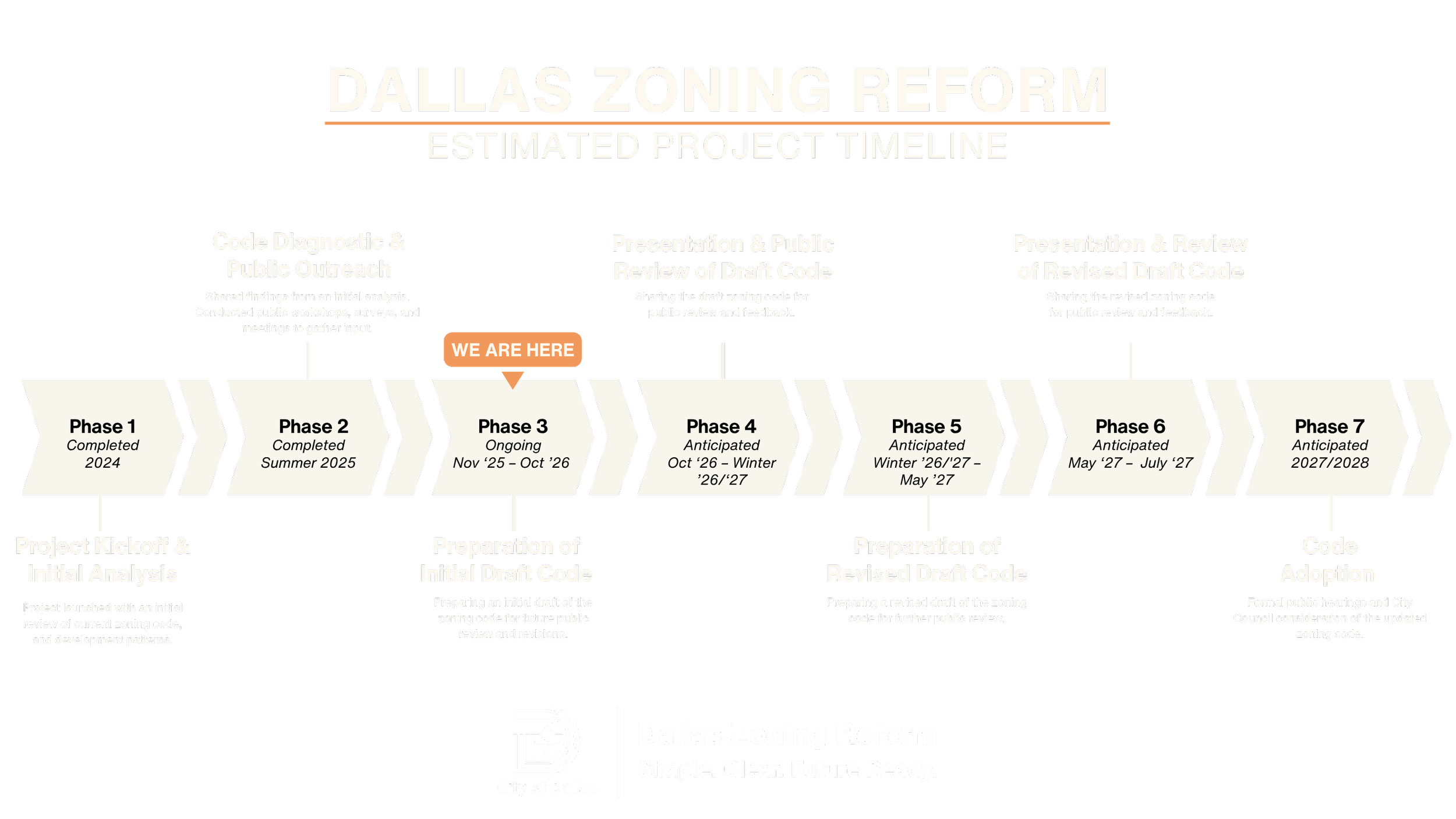
The Dallas Zoning Reform project is now in Phase 3: Preparation of the Initial Draft Code.
This estimated timeline offers a clearer view of the work ahead, from developing the draft code to public review, revisions and consideration for adoption. We’ll continue sharing updates and opportunities for Dallas residents to participate as each phase moves forward.